Italian Food

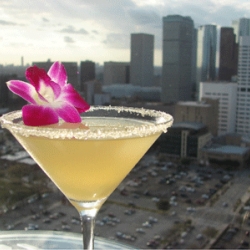
Italian Wedding Cake Martini

Yes it is finally Friday! Time to start the weekend! I apologize for not having a cocktail recipe last Friday but I am making up for it today. This is a simple 3 ingredient martini that is just bellisimo! Great way to kick off the weekend or any evening really. I have had an Italian Martini before but that has Amaretto in it. This one tastes just like a piece of cake! The calories may be just as much but that’s okay. So give it a try this weekend! I’ll be in Miami this weekend for the Goo Goo Dolls concert on Saturday night so I will be on the lookout for more cocktails to tell you all about as well as any new little snacks or restaurants. Don’t forget to keep checking my website too. I am adding new stuff every day. And if anyone has a request for a recipe, cocktail, restaurant recommendation or anything, just let me know here on the blog or the website at www.cucinadiandrea.com and I will make sure I do my best to accommodate you! Have a fantastic weekend all!

Photo is for illustrative purposes only!

INGREDIENTS:

2 ounces vanilla vodka

1 ounce White Creme de Cacao

splash of pineapple juice

DIRECTIONS:

Combine all ingredients in a cocktail shaker with ice. Shake well. Pour into chilled martini glass!

Makes 1 drink

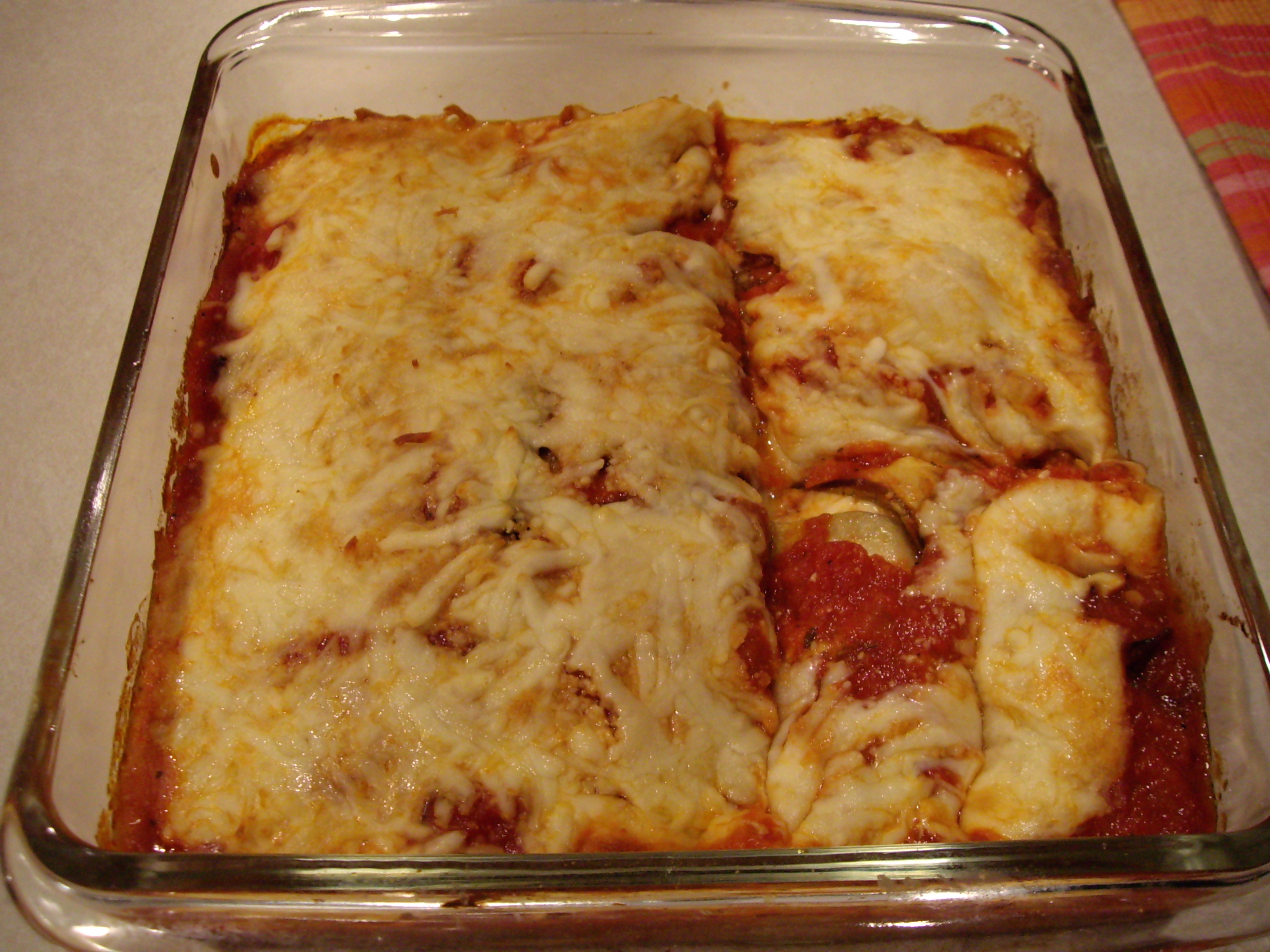
Baked Eggplant Italiano

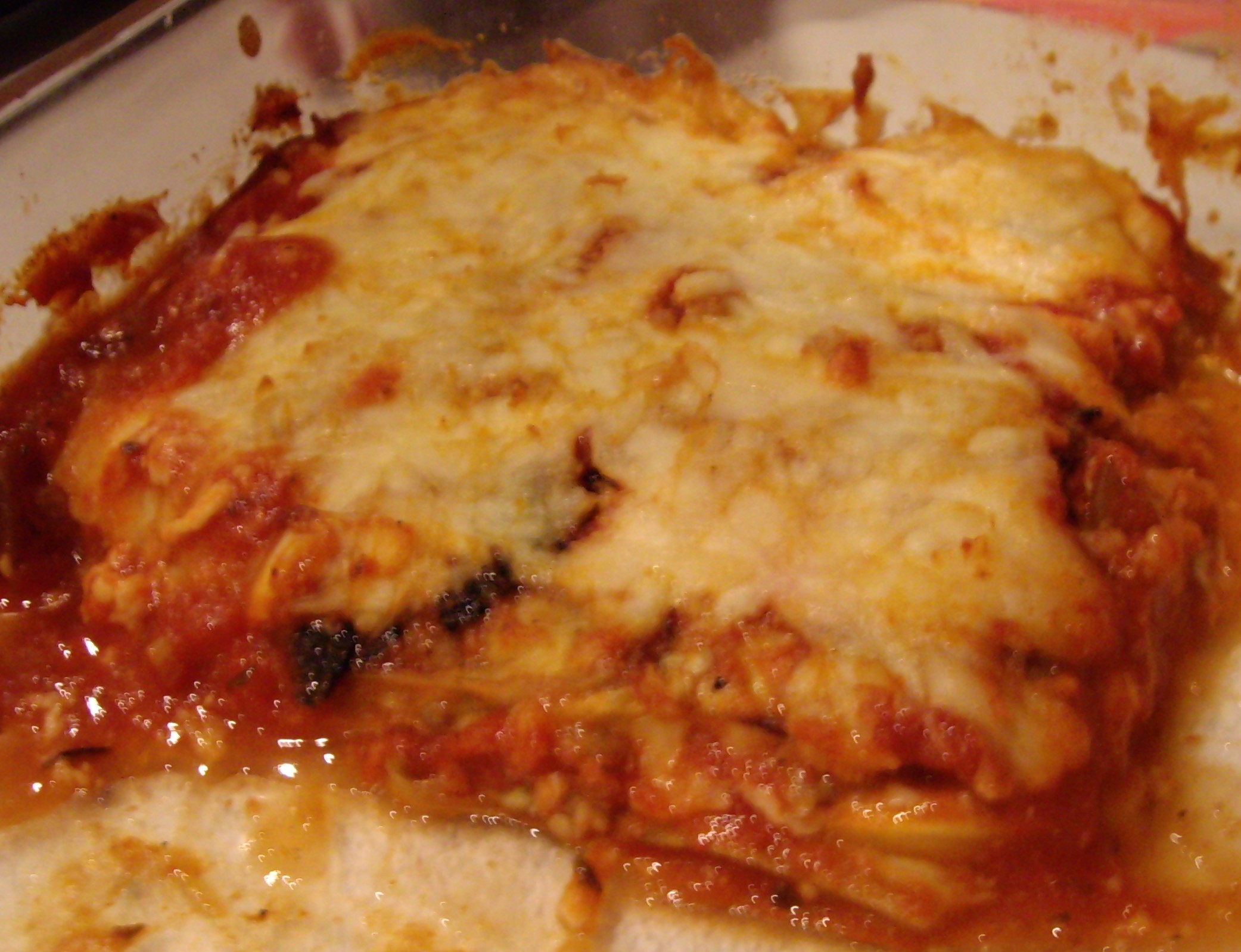
This is my  version of a healthier eggplant parmigiana dish. Yes it can be done! I did not use any breadcrumbs and I didn’t fry the eggplant. That is where most of the fat and calories come from. Don’t get me wrong, I love the old-fashioned breaded and fried version of this dish but I just can’t have the extra fat and calories anymore. Plus it takes forever to fry it all! Next in line with the fat is the cheese used. I used a shredded, reduced fat 4 cheese Italian mix. It has reduced fat mozzarella, smoked provolone, Asiago and Romano cheese. It’s made with 2% milk so it has 33% less fat and 10% fewer calories than the full fat version. I broiled the slices of eggplant on a cookie sheet under the broiler and only sprayed them with olive oil cooking spray. The dish came out great. It is very filling even without all the extra bread crumbs! I really enjoy eggplant and this time I remembered to make it pretty soon after I bought it. I have a tendency to buy it and forget it’s in the refrigerator for days. Then when I go to use it, it’s all brown and spotty inside. Yuck! So this time I bought it and cooked it the next day! Remember when buying an eggplant the top crown should be green and not brown. Brown is bad, means it’s been there a while and not fresh. By the way, the leftovers are just as good as the first time too! (I started to cut the eggplant before I remembered to take a picture)

INGREDIENTS:

1 large eggplant

olive oil cooking spray

marinara or your choice of pasta sauce

Parmesan cheese, grated

garlic powder

2 cups reduced fat shredded Italian cheese of choice (Sargento’s 4 Italian Cheese is great)


DIRECTIONS:

1. Peel eggplant. Slice it lengthwise or if you prefer, round. For this recipe I sliced it lengthwise.

2. Set your oven to broil and place the rack about 4 inches under the broiler. Spray 1-2 cookie sheets with the cooking spray.

3. Place eggplant in a single layer onto cookie sheets. Spray tops of eggplant with cooking spray and sprinkle with garlic powder. Broil eggplant 4-5 minutes on each side. When you flip the eggplant spray again with cooking spray. Keep an eye on the slices as they can easily burn. They should be lightly browned on the edges and soft. Do this until all eggplant is broiled. After eggplant is done, move the rack to the middle and set your oven to 350º.

4. In a square Pyrex or other oven proof baking dish put a thin layer of sauce on the bottom of the dish. Lay eggplant slices on bottom slightly overlapping till you have one layer. It should take about 3 large slices. Next add sauce to top of eggplant and spread a thin layer over it. Sprinkle with grated Parmesan cheese and about ¼ cup of the shredded cheese. Place another layer of eggplant, again overlapping slightly. I placed this layer in the other direction to give it more stability. Again apply sauce and cheeses. Continue until you have no eggplant left. Finish with shredded cheese on top.

5. Place the dish into the 350º oven and bake until sauce is bubbling and the cheese is all melted. About 15-20 minutes should do it. Remove from oven and let sit 5-10 minutes to let the sauce set up. It’s ok if it’s a little runny. Cut and serve!

This dish is great with a nice salad on the side or even a small dish of pasta.

Serves 2-4

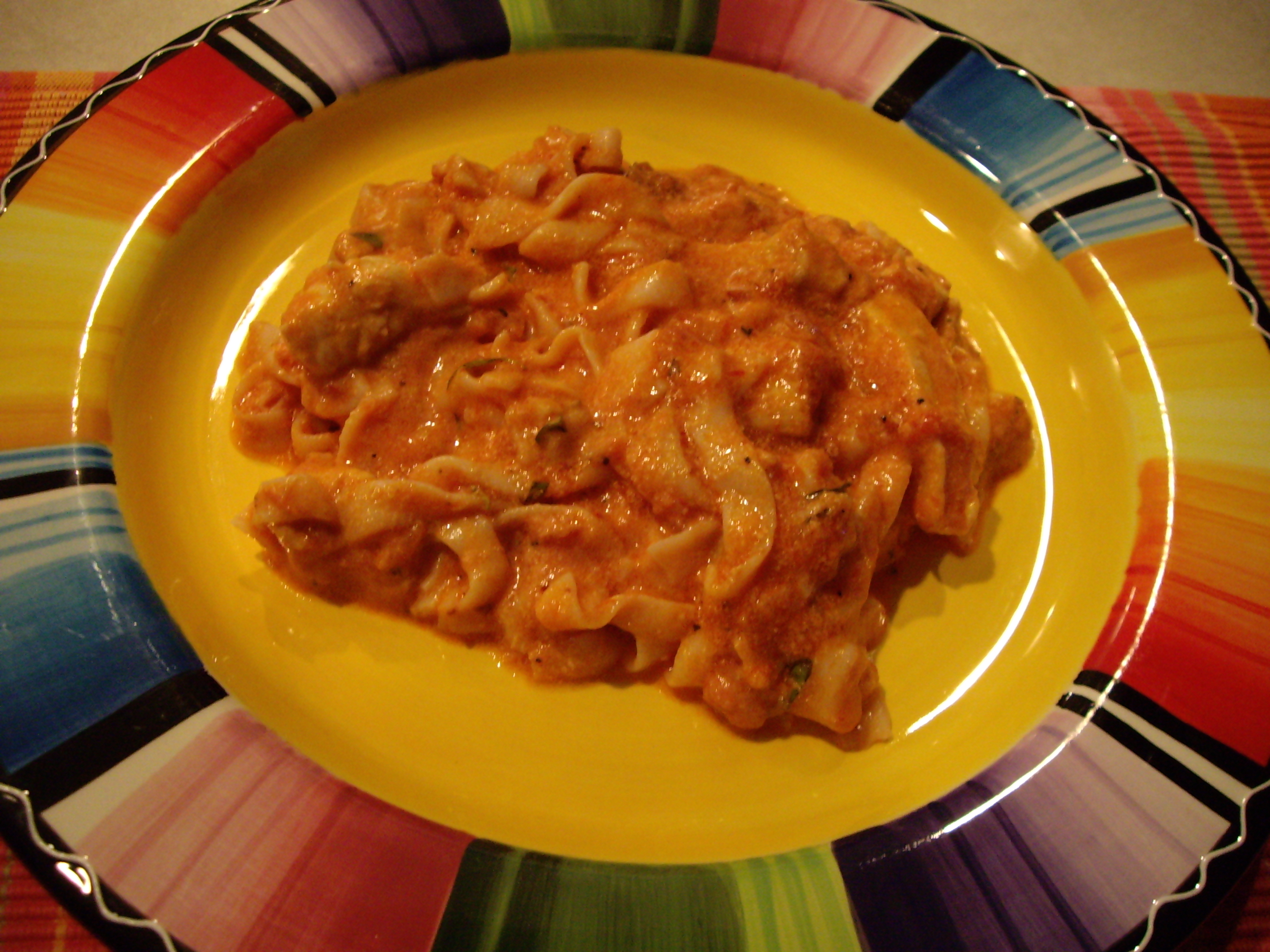
Chicken Penne a la Vodka (minus the vodka)

Yes, Penne a la vodka with no vodka. I was inspired by chef Rocco DiSpirito with this recipe. It was his originally and I made it my own. He didn’t have chicken in his recipe. He uses whole-wheat pasta and I used my favorite Tofu Shirataki Noodles. Usually this recipe is loaded with heavy cream and vodka, making it very high in calories. This tasted just as good and you will never miss the vodka or cream. Honest! It is much lower in fat and since I have added chicken to mine it’s got more protein. I also added a little more marinara sauce than the recipe calls for so mine is a little more red than normal. Also I used 16 ounces (2 packages) of the Shirataki Noodles, next time I will use only 8 ounces (1 package) Mangia!

INGREDIENTS:

1 pound boneless chicken breast cut into 1-2″ strips or pieces

2-3 tablespoons olive oil

2-3 cloves garlic, chopped

12 ounces whole-wheat penne pasta (or 1 package Tofu Shirataki Noodles)

2½ cups low-fat, sugar-free marinara sauce (or your favorite light sauce)

¼ teaspoon red pepper flakes

7.1 ounce container 2% fat Greek-style yogurt (or any container close to that amount)

1 cup chopped fresh basil

salt and pepper to taste

6 tablespoons grated Parmesan cheese

DIRECTIONS:

1. In a large saucepan sauté the garlic in the oil. When the garlic is lightly browned add the chicken and cook till browned. Remove chicken from pan and set aside.

2. If using whole wheat pasta  bring a large pot of salted water to a boil. Add the pasta and cook according to package directions, about 9 minutes. If you are using the Shirataki Noodles follow package directions.

3. Meanwhile, in a large, nonstick sauté pan over medium heat, combine the marinara sauce and red pepper flakes and bring to a simmer. Cook, stirring occasionally, for about 5 minutes or until it is reduced and slightly thickened.

4. Remove the marinara from the heat. In a small bowl, stir about ½ cup of the marinara into the Greek yogurt until it is smooth, to temper it, then whisk the yogurt mixture back into the marinara in the sauté pan.

5. Drain the pasta and add it to the pan, tossing to coat. (or add the Shirataki noodles) Add the chicken and toss to mix. Add the basil and season with salt and pepper, if necessary. Sprinkle with Parmesan cheese.

Serves 6

Pesto #5: Arugula Pesto

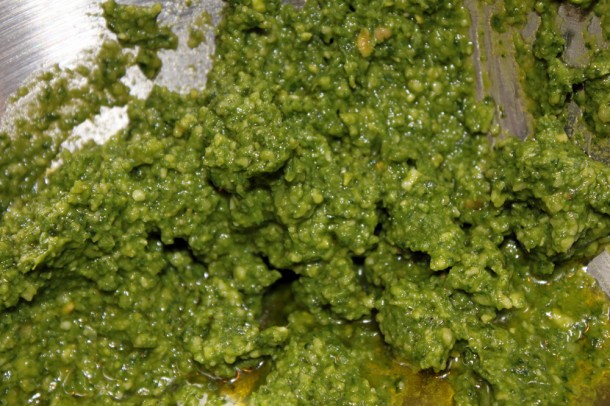
Just like basil pesto and spinach pesto, arugula pesto is a vibrant green color. Full of flavor with a little bit of a bite to it.  This is another perfect sauce for pasta. Make sure that you wash the arugula extremely well though. Change the water at least two times because it takes a while to remove all the soil and grit. Nobody likes a gritty pesto!

INGREDIENTS:

2 cups (packed) fresh arugula, cleaned extremely well!

1 garlic clove

½ cup olive oil

½ cup freshly grated Parmesan cheese

½ teaspoon salt, more to taste

½ teaspoon freshly ground black pepper, more to taste


DIRECTIONS:

1. In a food processor blend the arugula and garlic until finely chopped. With the machine running, gradually add the oil, processing until well blended.

2. Transfer the pesto to a large bowl and stir in the Parmesan cheese, salt and pepper. Season with more salt and pepper if needed. Cover and refrigerate.

Makes about 1 cup and can be made 2 days ahead.

Pesto #4: Mushroom Pesto

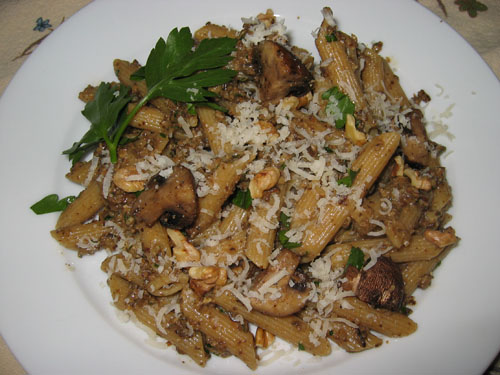
As we’ve seen this week, pesto comes in all colors. Green is the most popular color and red is a newcomer with its own distinct flavor. Mushroom pesto adds another. I don’t want to say brown but it’s the color of mushrooms.  This recipe uses both dried and fresh mushrooms. They both bring their own unique flavor and texture to the sauce. Dried porcini mushrooms are usually easy to find all year-round. They aren’t usually too cheap but if you can find them on sale they will keep for a while in your pantry. I even keep small cans of porcini and shiitake mushrooms in my pantry for any occasion as well. Try using them if you can’t find dried! This sauce is great on pasta but also just as good on toasted crostini (toasted bread slices)

INGREDIENTS:

1 ounce dried porcini mushrooms

8 ounces white button mushrooms, quartered

1½ cups fresh flat-leaf parsley leaves

½ cup toasted walnuts

2 garlic cloves

½ cup extra-virgin olive oil

½ cup freshly grated Parmesan cheese

½ teaspoon salt, more to taste

½ teaspoon freshly ground black pepper, more to taste


DIRECTIONS:

1. Bring a small saucepan of water to a boil. Remove the saucepan from the heat and add the porcini mushrooms, press to submerge. Let stand until the mushrooms are tender, about 15 minutes. Drain the soaking liquid from the mushrooms and discard.

2. In a bowl of the food processor add the porcini mushrooms, button mushrooms, parsley, toasted walnuts, and garlic. With the machine still running, gradually add the oil, blending just until the mushrooms are finely chopped. Transfer to a medium bowl. Stir in the Parmesan cheese, salt and pepper. Add more salt and pepper if needed. Cover and refrigerate.

Makes about 1 cup and can be made 2 days ahead.

Pesto #3: Spinach and Pine Nut Pesto

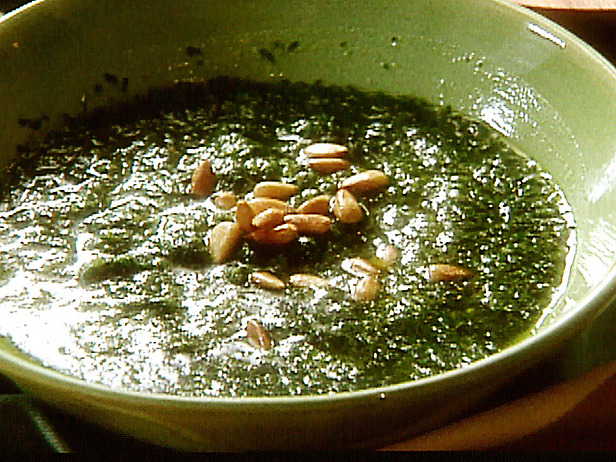
Spinach and pine nut pesto is almost the same as the basil pesto. It looks the same and tastes just as good. Basil can be expensive especially if you’re using a large quantity of it. But with the wonderful bags of washed, pretrimmed spinach making a spinach pesto is a snap. Using the bags saves so much time as well, you don’t have to keep cleaning it over and over to get all the dirt out of it. And there are sales almost all the time for the bags of spinach. Many of them are buy 1 get 1 free! So this is a more economical way to make a great pesto! This pesto is great with grilled chicken, pasta, anything!

INGREDIENTS:

2 cups (tightly packed) baby spinach leaves (about 2 ounces)

¼ cup toasted pine nuts

1-2 teaspoons grated lemon zest (from about 1 lemon)

2 tablespoons fresh lemon juice (from about ½ lemon)

1/3 cup extra-virgin olive oil

1/3 cup freshly grated Parmesan cheese

½ teaspoon salt, more to taste

½ teaspoon freshly ground black pepper, more to taste


DIRECTIONS:

1. In a food processor, combine the spinach, pine nuts, lemon zest, and lemon juice. With the machine running, gradually add the oil, blending until it is creamy.

2. Transfer the pesto to a medium bowl. Stir in the cheese, salt and pepper. Add more salt and pepper to taste. Cover and refrigerate.

Makes 1 cup. The pesto can be made 2 days ahead of time.

Pesto #2: Sun-Dried Tomato Pesto

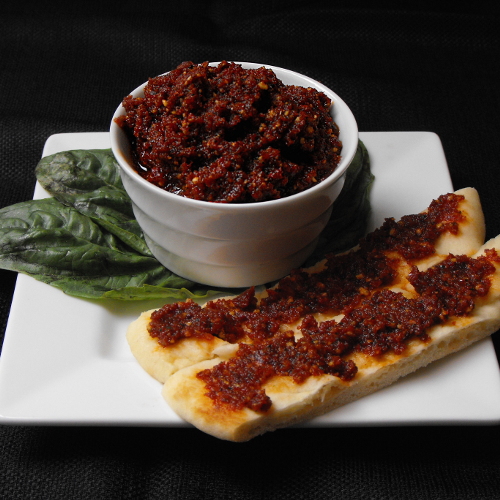
Sun-dried tomato pesto is not your usual pesto sauce. It’s great for topping sautéed or grilled fish and can be eaten hot or cold! It can also be used as a sauce on penne pasta. However you want to use it will be great! Using sun-dried tomatoes makes this pesto a sauce you can make all year-long as sun-dried tomatoes have a long pantry life and are great for so many recipes they won’t go to waste.

INGREDIENTS:

1 (8.5 ounce) jar of sun-dried tomatoes packed in olive oil*

1 cup (packed) fresh basil leaves

2 garlic cloves

½ cup freshly grated Parmesan cheese

½ teaspoon salt, more to taste

½ teaspoon freshly ground black pepper, more to taste


DIRECTIONS:

1. In a food processor, blend the sun-dried tomatoes and their oil with the basil and garlic just until the tomatoes are finely chopped.

2. Transfer the pesto to a medium bowl and stir in the cheese and salt and pepper. Season with more salt and pepper if needed.

Makes about 1 cup and will last for 1 week if stored in an airtight container.

* If you can’t find oil-packed tomatoes, then soak dry sun-dried tomatoes in extra-virgin olive oil for 12 hours.

Pesto #1: Basil Pesto

Basil pesto is the most basic and traditional pesto. It is what most people think of when you mention pesto. The basil-based pesto was invented in Genoa, Italy. It is also sometimes called a Genovese sauce. It should be a beautiful bright green and the aroma is almost intoxicating. Just remember when adding the oil, add it slowly. This is so that the sauce is fully emulsified, meaning all the ingredients blend together in a thick, uniform consistency. There are also many types of basil out there in the markets today so be adventurous and try a few of them for their different flavors! And remember you will be using quite a bit in the recipe so if it’s on sale all the better!

INGREDIENTS:

2 cups (packed) fresh basil leaves

¼ cup toasted pine nuts (pignoli)*

1-2 cloves garlic

½ teaspoon salt, plus a little more to taste

¼ teaspoon freshly ground black pepper, plus a little more to taste

2/3 cup extra-virgin olive oil

½ cup freshly grated Parmesan cheese


DIRECTIONS:

1. In a food processor or blender, pulse the basil, pine nuts, garlic, ½ teaspoon salt, and ¼ teaspoon of the black pepper until finely chopped.

2. With the processor or blender still running, gradually add enough oil to form a smooth and thick consistency. Transfer the pesto to a medium bowl and stir in the cheese. Season with more salt and pepper to taste. Cover and refrigerate.

Makes about 1 cup. The pesto can be made up to 2 days ahead.

*To toast pine nuts for pesto, bake them on a cookie sheet at 400ºF for 5-10 minutes, stirring occasionally. Just keep an eye on them because they can burn very quickly!

**TIP** If using the pesto as a pasta sauce it must be the right consistency. So when your pasta is just about ready you can add a little bit of the pasta cooking liquid to the pest to get it a little thinner so it will coat the pasta. Just be careful you don’t add too much and make it a pesto soup!

Italian Sauces (Part 2)

As promised here are more of the popular Italian sauces. They are by no means ALL of the sauces Italian food has to offer but it will cover most of them. I am also including a dessert sauce which most of you may have heard of, zabaglione. If anyone has a sauce I didn’t cover please let me know and I will do my best to find out all there is to know about it and I will post it. Mangia!

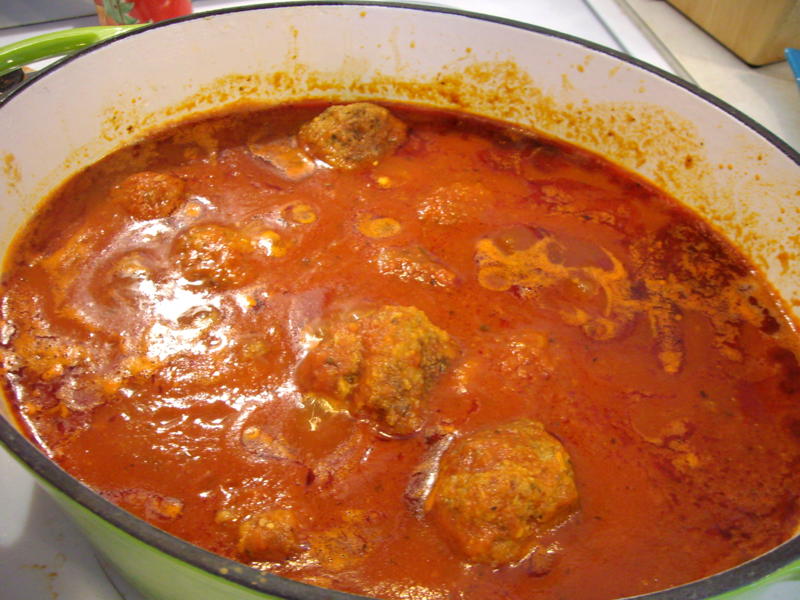
Neapolitan Ragù: This sauce is one of the two most famous varieties of meat sauces called ragù. (The other if you recall was the Bolognese sauce). This is a specialty of Naples as its name indicates. Like the Bolognese sauce, the Neapolitan sauce is also made from three main parts: a soffritto (a partially fried mixture of chopped onions, celery, carrots, seasonings, etc.), meat and tomato sauce. Neapolitan uses the whole meat, the soffritto has much more onion and in Naples, red wine is used instead of white, olive oil is used instead of butter and lots of basil leaves are used where Bolognese sauce has no herbs. Since the tomato season in Southern Naples is much longer than in Northern Bologna much more tomatoes are used. Neapolitan ragù is very similar to what most Italian-Americans calls “Sunday gravy,” because of the wider variety of meat in the American version, such as meatballs, braciole, sausage, and pork.

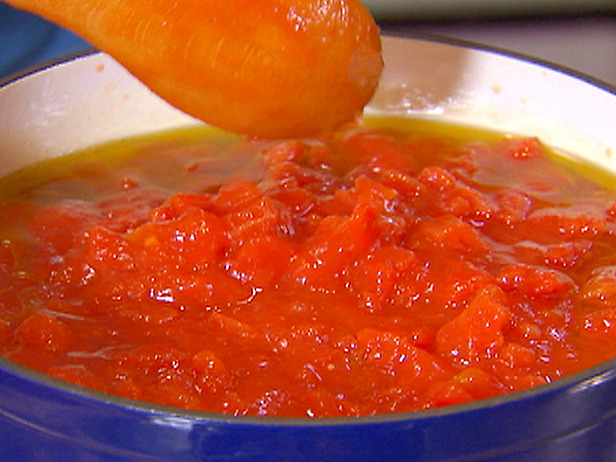
Pomodoro: Pomodoro when literally translated means “golden apple”. It is a basic tomato sauce. The first tomatoes that arrived in Italy were yellow, hence the name. The sauce uses a lot of garlic and basil as well as tomatoes. Basic and simple. This sauce is usually a little thicker than marinara and cooks longer so it can be darker in color. It also is usually made from fresh tomatoes rather than canned.

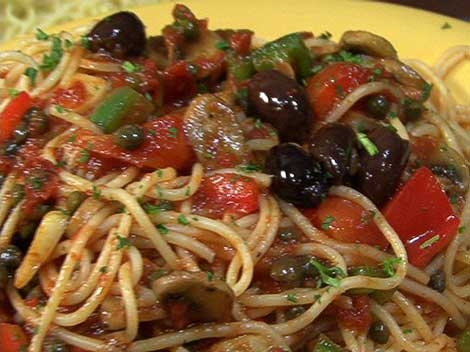
Puttanesca: Puttanesca sauce is an intensely fragrant and flavorful sauce. It’s a blend of tomatoes, onions, black olives, anchovies, capers, garlic and oregano, all simmered with olive oil. It is a spicy, tangy and somewhat salty sauce and is considered a modern sauce. The ingredients are typical of Mediterranean cuisine.

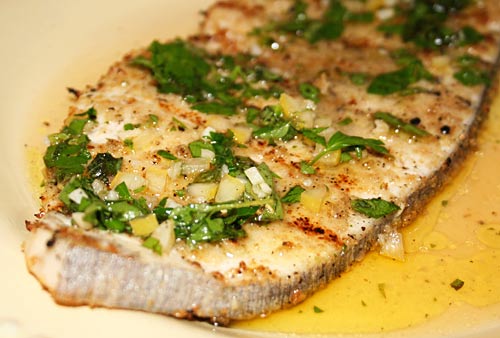
Salmoriglio: I admit I have never heard of this kind of sauce. It is a southern Italian condiment actually. Made of lemon juice, olive oil, minced garlic (yum), chopped oregano and parsley, salt and pepper; it’s usually served with seafood or grilled and roasted meats. Sounds very Mediterranean to me! (The photo below is grilled swordfish with salmoriglio)

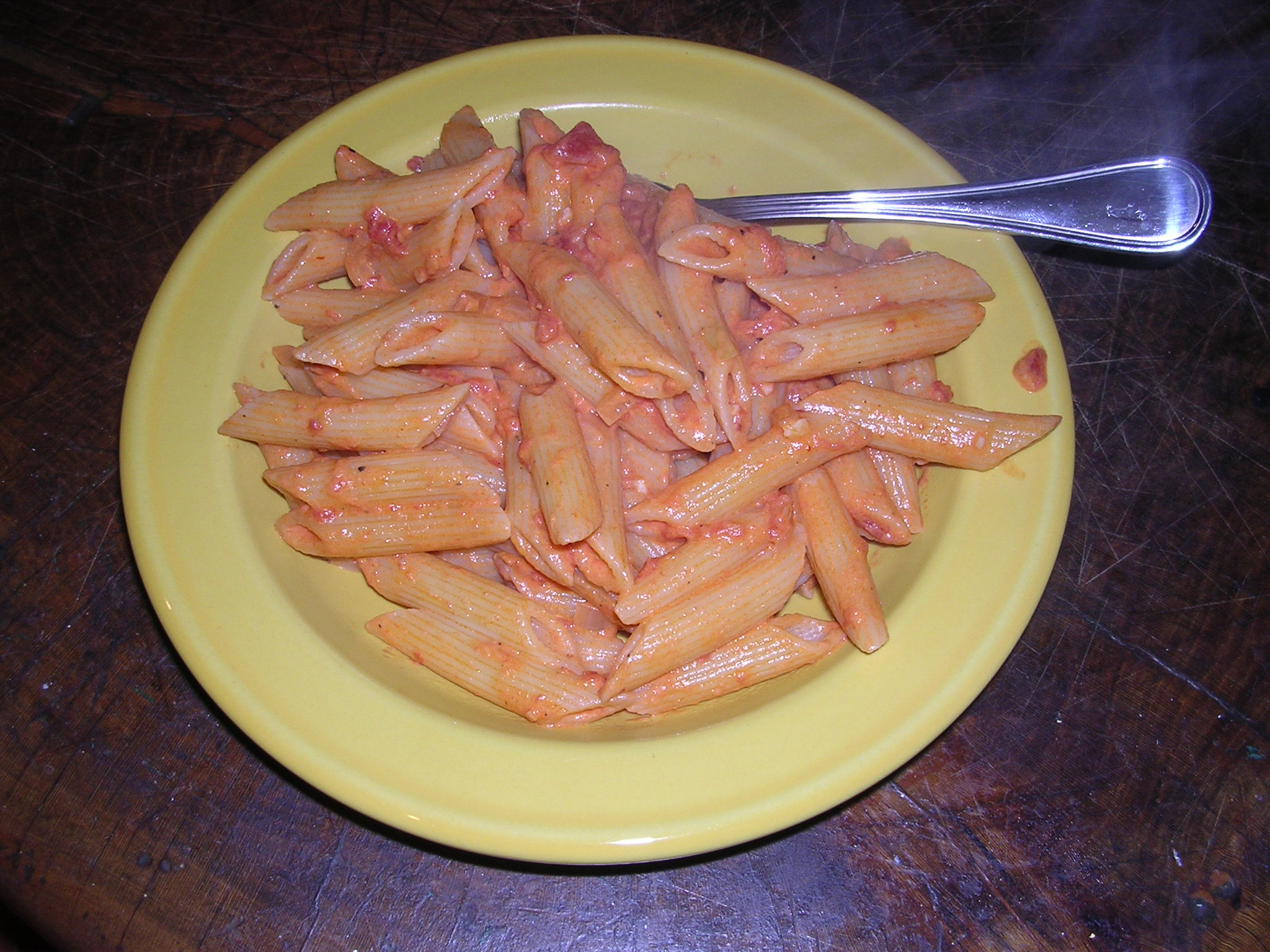
Vodka Sauce: What would Penne ala Vodka be without vodka sauce? Plain penne! Vodka sauce is an Italian red sauce made from a relatively smooth tomato sauce, plus cream, vodka and the usual Italian herbs. It only gained popularity in the 1970s when a variation won a national recipe contest in Italy! Even though it’s the key ingredient in Penne ala Vodka it may well have been a sauce long before its “invention” in the 1970s. The vodka’s function is to release the flavors in the tomato that are usually inaccessible. Using alcohol for this purpose is common in Italian cooking, although more often wine is used.

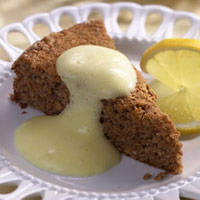
Zabaglione: A dessert sauce. Zabaglione is a light, frothy, custard of whisked egg yolks, Marsala wine and sugar. It can be served alone or as a sauce to pour over cake, pastry, fruit and ice cream! Sound low cal to me too! A delicious sauce to say the least! The origin of zabaglione is uncertain. It might have originated Turin in the sixteenth century.


Italian Sauces (Part 1)

When most people think of Italian sauces they usually think of the tomato sauce, marinara sauce, alfredo sauce and probably white clam sauce. But there are so many more sauces out there  that are all wonderful in their own way. Growing up in my house my mother used to serve us a quick spaghetti meal we called Aiole. It was a basic olive oil and garlic sauce. Simple and fast and it was delicious. I am going to go through most of the basic sauces out there and hopefully put in some pictures so you know what they look like. I will have the second half of them next week so keep an eye open for them!

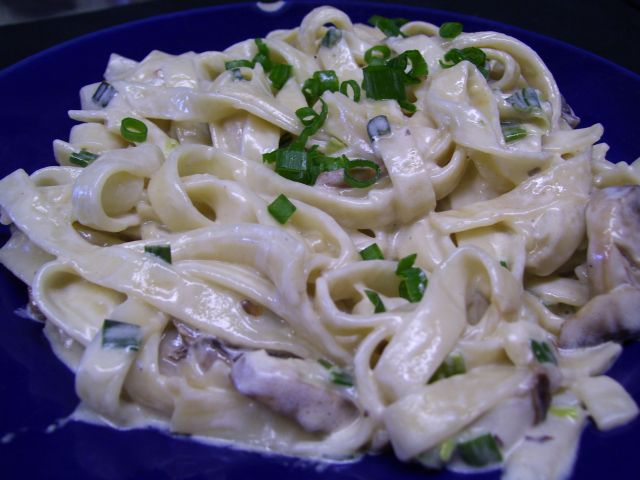
ALFREDO: Alfredo sauce is rich with heavy cream, butter, and freshly grated Parmesan cheese. It is best known when used with fettuccine. Love the sauce, hate the fat and calories! A luxury I must have every so often. You don’t have to limit it to fettuccine either, use it on any kind of pasta you want. Usually the heavier pastas do best. Throw some chicken or shrimp in there as well and it gets even better!
Fettuccine Alfredo

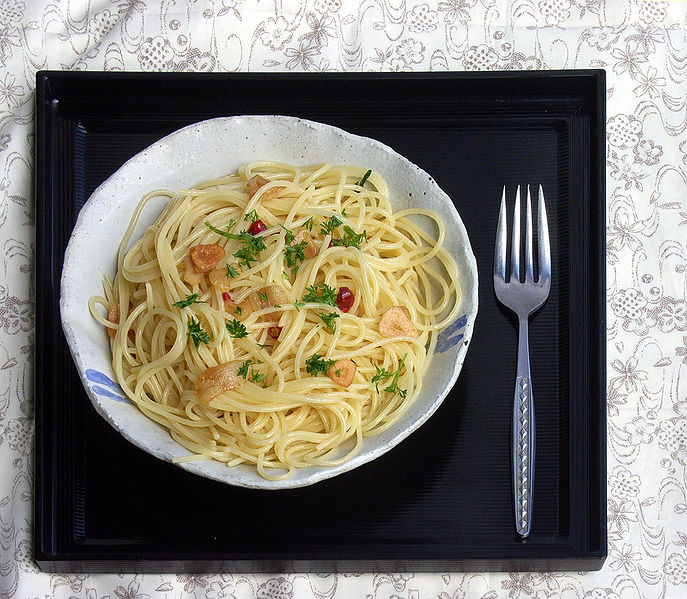
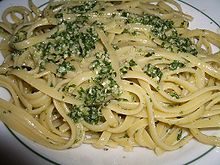
AGLIO E OLIO: This is a traditional Italian sauce (it’s what we called Aiole) that can be made on a budget. This is probably why we had it so often. It is said to have originated in the isolated region of Abruzzo but it is popular everywhere in Italy. It is usually served with spaghetti (that’s how we had it) and the sauce is made by lightly sautéing minced or pressed garlic in olive oil, sometimes adding dried red pepper flakes. You can also add finely chopped fresh parsley and parmesan cheese.

Aglio e Olio

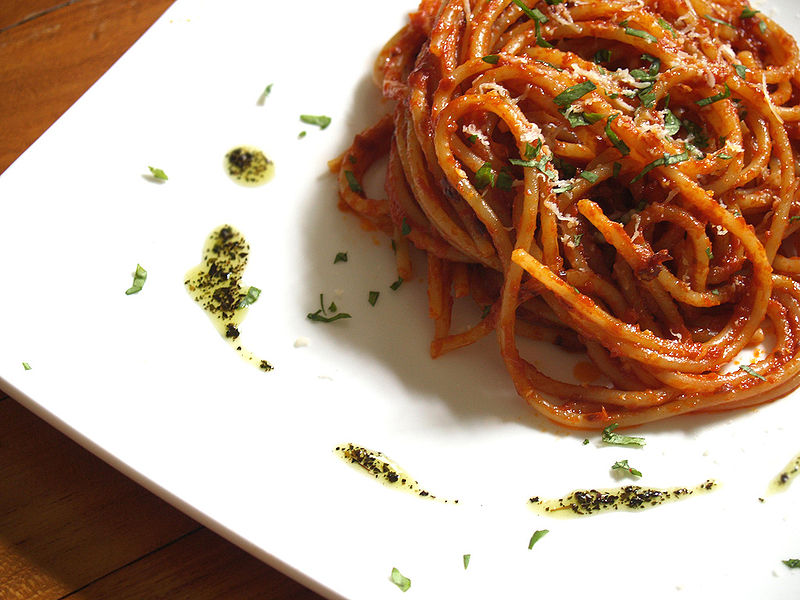
ARRABBIATA: Arrabbiata is Italian for “angry”. This is a zesty tomato based sauce that gets its heat from chili peppers. It is basically a Roman sauce of garlic, tomatoes, and red chili peppers cooked in olive oil. Basil is used sometimes though most chefs in Italy don’t use it. This dish is usually served with pasta and chopped fresh parsley sprinkled on top.
Spaghetti Arrabbiata

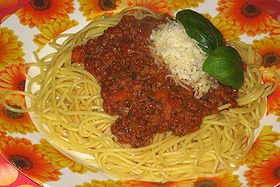
BOLOGNESE: Bolognese sauce is a robust meat sauce also known as ragù (no not the jar sauce!). It is a hearty sauce with ground beef or pork, pancetta, tomatoes, onions, garlic, carrots and celery. The sauce is sometimes enhanced by adding a little bit of wine, cream and seasoning. This sauce originated in Bologna, Italy where the natives traditionally serve it with freshly made tagliatelle and their traditionally green lasagna. Spaghetti alla Bolognese is a form that is popular outside of Italy which consists of a meat sauce served on a bed of spaghetti with a good sprinkling of grated Parmigiano cheese. What is really funny about this version is that it never really existed in Bologna, where the sauce is always served with tagliatelle or lasagna (egg pastas). Spaghetti is a durum wheat pasta from Naples.
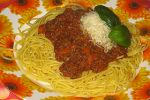
Spaghetti Bolognese

CARBONARA: Carbonara is another popular sauce that is usually made with eggs, cream, Parmesan cheese and bits of bacon. Many times this sauce also has green peas in it as well. Usually served with spaghetti it is also used on fettuccine, rigatoni or bucatini. Recipes vary but all agree that cheese, eggs, cured fatty pork (pancetta) and black pepper are basic. Origins of this dish are obscure and it has many legends about it. It was created in the middle of the 20th century so it’s not that old as far as sauces go.
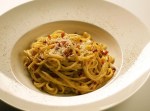
Spaghetti alla Carbonara

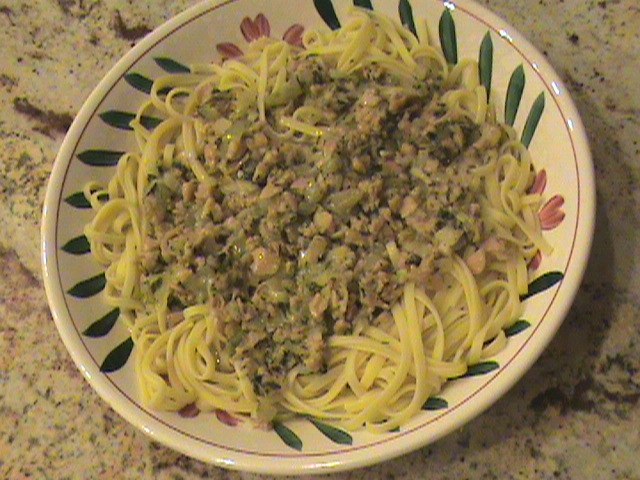
CLAM SAUCE: The most popular clam sauce is the white version. Usually served with linguine this popular sauce has minced clams, olive oil, garlic, lemon juice and parsley. There is also a thin tomato sauce with minced clams. You don’t usually see this recipe on menus much. Some versions use whole clams and hot pepper flakes.
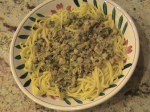
Linguine with Clam Sauce

GENOVESE/PESTO: I don’t think I’ve ever really heard of a Genovese sauce before. Most of us know this sauce as Pesto. The name means it originates from Genoa (imagine that!), which is a coastal city in NW Italy. Genovese/Pesto sauce is an uncooked sauce traditionally made of fresh basil, garlic, Parmesan cheese, pine nuts and olive oil. It didn’t really become popular in North America until the 1980s and 1990s.
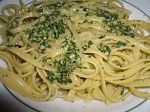
Fettuccine with Pesto Sauce

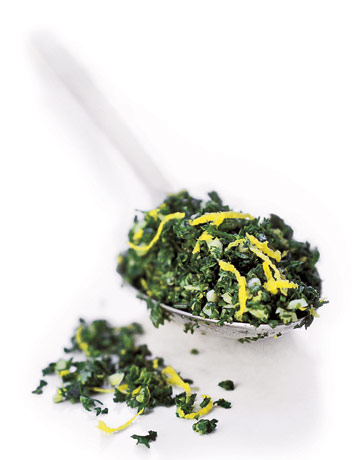
GREMOLATA: Ok here is another sauce I never heard of anywhere. It is more of a chopped herb condiment. It’s typically made of garlic, parsley, and lemon zest. Traditionally it’s used as an accompaniment to the Italian classic Osso Buco (braised veal shank). The citrus element in this actually makes it a great addition to seafood dishes as well!
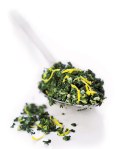
Gremolata Sauce

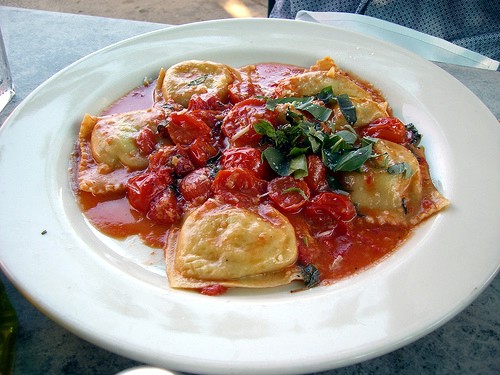
MARINARA: This is the classic Italian tomato sauce. It’s seasoned with onions, garlic and oregano, and basil. It’s a favorite on pasta, pizza and meats. This is another sauce that has many variations. Some of them even call for adding capers, olives and spices. Italians refer to marinara only in association with other recipes. Spaghetti alla marinara literally translates to mariner’s spaghetti. However, tomato sauce is called salsa al pomodoro which includes marinara sauce as well as other tomato-based sauce. Marinara sauce was invented by cooks aboard Neapolitan ships in the mid-1500s after the Spaniards introduced the tomato (a New World vegetable) to Europe! This is a very easy sauce to make and it resists spoiling due to the high acid content of the tomatoes. This is why it was ideal for lengthy sea voyages hundreds of years before we had refrigeration! This sauce is great on so many pastas as well as chicken, pork, veal, fish, you name it!
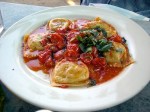
Ravioli Marinara

MORE SAUCES NEXT SUNDAY!!

Cruise Ship Recipes at Home

How do I Make That?

Rachael Ray

It's Not Just Popcorn!

Joanne Eats Well With Others

It's Not Just Popcorn!

Garlic Girl

It's Not Just Popcorn!

BuzzFeed - Tasty

It's Not Just Popcorn!

An Edible Mosaic™

It's Not Just Popcorn!

StephenKing.com - Latest News

It's Not Just Popcorn!

Food52

It's Not Just Popcorn!

Big Bear's Wife

It's Not Just Popcorn!

The Weekend Gourmet

It's Not Just Popcorn!

Skinnytaste

It's Not Just Popcorn!

What's Cooking at the Genua's?

It's Not Just Popcorn!

Simply Recipes

It's Not Just Popcorn!

It's Not Just Popcorn!

Homemade In The Kitchen

Small Batch Recipes and Recipes For Two

overdeepblueseas

OVER DEEP BLUE SEAS BLOG @ WordPress.com

Sluggo's Escapades

What's Sluggo up to today?

RavieNomNoms

A Girl, Her Blog, and Lots of Food Pictures!