Article

Fourth of July Food For Kids

This is a long holiday weekend and sometimes we tend to forget kids are involved as well. Not all of us have our own kids but we have family and friends who do. So check out this great little e-book of food and snacks for the younger generation. It’s got easy and kid-friendly recipes that even the big kids will love!

Sample Recipes:

4th of July Fruit Kabobs

• Bananas • Strawberries • Large Fresh Blueberries • Kabob Skewers

Slice bananas into large chunks. Alternate fruit on skewers Serve immediately

Pretzel Sparklers

• Long rod pretzels • White chocolate, melted • Sprinkles (red, white and blue) or star cake decorations

Melt the white chocolate. Dip the pretzel rod halfway into the melted chocolate then sprinkle the sprinkles over the wet chocolate. Lay on waxed paper or place in a cup to dry.

Popsicle Rockets

• Red juice (red raspberry, cherry, cranberry) • Blue juice (blue Kool Aid, Gatorade, blue raspberry) • White juice (lemonade, coconut juice drink) • Red string licorice for fuse • 3 oz. paper cups • Popsicle Sticks

Line up several 3 oz. paper cups on a baking sheet. Pour 2 tablespoons of red juice into each cup. Freeze 2-3 hours until firm-slushy. Remove from freezer and poke a Popsicle stick into the center of each cup of juice. Add 2 tablespoons of white juice and freeze 2-3 hours. Remove from freezer. Top off with blue juice and freeze 1-2 hours until slushy.

Remove from freezer and insert a 2 or 3-inch string of licorice into each Popsicle. Freeze until hard. Peel off paper cups to serve.

So click on the Flag below and you can download a free recipe book!

And don’t forget to check my website as it grows! www.cucinadiandrea.com

The Italian Kitchen (Part 3)

Today’s post is all about what should be in an Italian Pantry.  By stocking your kitchen with a few basic ingredients you’ll be ready to prepare most Italian and Tuscan recipes. Our supermarkets are much better at carrying the ingredients than they used to be. But if there’s still something you can’t find, there’s always the “pork store.” You know the place, it always smells so good when you walk by. Basically any Italian specialty store will have anything you need. Remember, using high-quality ingredients at the best price you can get them at is crucial. The better the olive oil, tomatoes and cheese, the better the simple dishes will taste!

This list is just a basic list of what is found in most good Italian kitchens.

Olive Oil: An essential in Italian cooking. Stick with extra-virgin olive oil for most recipes.

Dried Pasta: Use pasta imported from Italy such as Barilla and DeCecco. For the most part any imported pasta products made from semolina flour are good choices. For egg pasta, stay away from the so-called “fresh” pasta sold in refrigerated cases. They aren’t so “fresh” as they would have you believe. Either use homemade or buy the dried noodles packaged in nests.

Tomatoes: When fresh, ripe tomatoes are not available, use good canned tomatoes (unless recipe specifically calls for fresh). Choose whole, peeled tomatoes rather than chopped or crushed. Imported Italian San Marzano tomatoes are the best if you can find them.

Onions and Garlic: Generally, white or yellow onions for cooking and red onions for salads and dishes that do not need cooking because they are milder. Garlic should not be an overwhelming presence.

Parmigiano-Reggiano Cheese: Expensive but worth it. Excellent grating cheese as well as a table cheese. Drizzle a little balsamic vinegar and olive oil over it and have it with some crusty Italian bread.

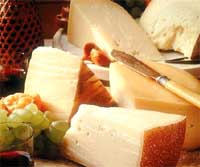
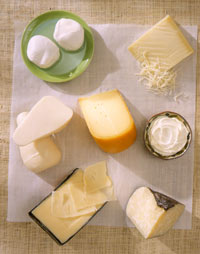
Cheeses: Cheeses are very important for Italian dishes. The basics like Parmigiano-Reggiano, Pecorino Romano, mozzarella, ricotta, and provolone are a good choice to have around.

Legumes (beans): Dried cannelini beans, lentils and ceci (Garbanzo/chick peas) are always good to have on hand. Canned beans work just as well especially if you’re in a rush.

Cornmeal: Use a medium textured cornmeal for polenta. Keep it in a tightly closed container and it will last for months. It’s also good for dusting the pan when making pizza.

Rice: Arborio is the most common in making risotto but others are used as well.

Balsamic Vinegar: There are many different balsamic vinegars. Depending on its age, it can be very expensive. You can use the inexpensive  one for salads as long as the quality is good.

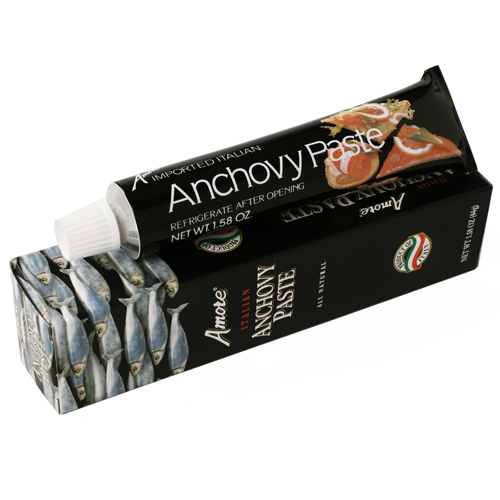
Anchovies: (I love these salty little buggers!)It’s good to keep a jar of these in the fridge to add a special zip to certain dishes. You can also find anchovy paste in a tube, which is milder in taste and very convenient to have. (I use the tube)

Dried Porcini Mushrooms: Look for packages that have slices of whole mushrooms. They can be a little expensive but a little goes a long way. Keep it in an airtight container and they’ll keep for a long time. If you rehydrate them, keep the water, strain it and use it to add some flavor and depth to soups, sauces and stews.

Capers: (My husband’s favorite) You can find two kinds of capers. The smaller ones that are pickled in vinegar, and the larger ones that come packed in salt. The larger ones are very flavorful and need rinsing of the salt before using. They are also harder to find. A few chopped capers can add a nice flavor addition to dishes that seem to need just a little something.

Olives: Both black and green varieties are good. If they are packed in brine and imported from Italy, even better. We like the stuffed ones. Stuffed with bleu cheese, anchovies, garlic, peppers…

Herbs and Seasonings: For the most part fresh herbs are preferred in everyday cooking, but this is hard to do and they are generally more expensive and can go bad quickly if not used. So always keep on hand dried herbs and seasonings. Keep dried oregano, rosemary, thyme, and sage. I also always keep garlic powder on hand. Whole black pepper to be ground at the moment of use, sea salt and red pepper flakes are also important to have in your pantry.

Flour: All-purpose flour is good to use for making pasta and pizza dough. Bread flour for cakes and semolina flour for pasta is also very useful.


The Italian Kitchen (Part 2)

Today’s  post on The Italian Kitchen is going to be a glossary of some basic Italian kitchen ingredients. Most of them will be familiar to everyone but this will give a little information about each of them.

Arborio Rice: Risotto is usually made with this Italian rice, though other rice can be used. Risotto is Arborio rice that is browned first in margarine, butter, or oil, then cooked in broth. The finished rice has a creamy consistency and a tender, but slightly firm, texture.

Artichokes: You should look for firm, compact globes that are heavy for their size. They should yield slightly to pressure and have large, tightly closed leaves. Sometimes you’ll see leaf edges that are darkened. This is because the plant got too cold but it does not affect the quality. To store, keep fresh artichokes in a plastic bag in the refrigerator for up to a week. To prepare an artichoke, cut off the bottom stem so it sits flat. Cut off about 1 inch from the top. Remove loose outer leaves. With a pair of kitchen shears, snip ½ inch from tips of leaves. Brush cut surfaces with lemon juice to prevent browning.

Balsamic Vinegar: This sweet, dark brown vinegar is made from the boiled-down juice of a white grape. According to Italian law, balsamic vinegar labeled as “aceto balsamico tradizionale” cannot contain any wine vinegar and must be aged at least 12 years. These vinegars can sell from $40-$350 per 4 ounces!! Less expensive balsamics blend wine vinegar with the grape juice. This is what most of us buy at the supermarket. If you can afford the expensive stuff go ahead and splurge.

Basil: My favorite Italian herb by a long shot! Love how this smells! The aroma and flavor of this herb range from peppery and robust to sweet and spicy. It’s leaves can be various shades of green or purple. The leaves can be used in dried or fresh form. The fresh form is amazing but always keep the dried on hand!

Garlic: The ultimate Italian ingredient! As I’ve said before, you can never have too much garlic! The plant  of this strong-scented, pungent bulb is related to the onion. Besides fresh garlic bulbs, you can also use dried. Some people use jarred minced garlic. I don’t recommend this. Garlic comes in the form of garlic powder, garlic salt, and garlic paste. Leave the bulbs whole, once you separate them they tend to dry out. Garlic should be kept in a cool, dry, dark place and used within 6 months. I planted garlic cloves once and they really grew! Pretty cool!

Italian Parsley: Italian parsley has flat, dark leaves and a milder flavor than the more familiar curly leaf parsley.

Mushrooms: Porcini– the most prized wild mushrooms in Italy, have large, meaty, slightly rounded caps that may be white or reddish-brown. The stems are fleshy and wider at the bottom. Another mushroom in Italy is the Crimini/Portobello (Italian brown or Roman), which has the same shape as a regular button mushroom but is light tan to dark brown with a deeper, earthier flavor. When the mushrooms are small they are Crimini. Once the Crimini is fully matured it is a Portobello. To clean, brush mushrooms with a soft brush or damp paper towel. Store them in a paper bag until ready to use. Serve within a couple of days. If you can’t find the fresh version of what you want, look for the dried form. You can add fresh or rehydrated mushrooms to soups, sauces, salads, appetizers, pasta dishes, and entrees.

Olive Oil: No Italian kitchen is complete without a bottle of olive oil. I remember my mother always had one of those gallon type cans in the kitchen when we were growing up. Too expensive now to buy that huge can! The quality of olive oil is classified by the level of acidity, taste, and aroma. Olive oils higher in acidity can be rectified or treated with chemicals to lower the acidity, but are called refined, not virgin.  Olive oil has the same amount of calories that other oils contain–120 calories per tablespoon. But olive oil is highly unsaturated and has been suggested as a healthier alternative to more saturated fat or oils. Additionally, olive oil is a highly flavored oil, so you can use much less than oils with lighter flavors.

Types of Olive Oil

Extra-virgin olive oil is the best grade of olive oil; it meets Italy’s highest standards for rich and fruity olive taste with very lowe acidity (less than 1%)

Virgin olive oil has an acidity between 1 and 3 percent and a lighter taste and aroma. It is considered to be slightly inferior in quality to extra-virgin olive oil.

Pure olive oil is filtered twice after a single cold-pressing to lighten the oil’s color and aroma and lessen the acidity. It has a delicate flavor and a low acidity.

Cold-pressed olive oil is obtained by pressing the fruit. No heat or solvents are used, therefore it is called “cold-pressed.”

Extra-light olive oil refers only to the oil’s flavor, not to the calories it contains compared to the other olive oils.

Olives: Italians prefer to use ripe olives rather than the unripe green variety. Although ripe olives in America are usually black, the color of Italian ripe olives can vary from purplish red and brown to jet-black. They are packed in oil or brine, which may be flavored with herbs or citrus pee. Taste olives before serving. If they’re too salty, rinse them under cold running water. They can become bitter if overcooked, so allow them just enough time to heat through when adding to a cooked dish.

Pancetta (pan-CHEH-tuh): Pancetta is the Italian version of bacon. It’s made from the belly or pancia of a hog. Pancetta has deep pink stripes of flesh similar to bacon. Pancetta is seasoned with pepper and other spices, and is cured with salt, but it’s not smoked. It comes in a sausage-like roll or flat and is used to flavor sauces, vegetables, or meats.

Pesto (PES-toh): I love pesto. It’s so easy to make yourself too. Much better than those jarred ones in the store. It’s a pasty sauce of olive oil, garlic, fresh basil, and Parmesan cheese. It is usually served with pasta.

Pignoli Nuts (Pine Nuts): This is a unique and tasty little “nut”. They can be really expensive too but I’ve found it at a few places that won’t break the bank. The pignoli is a small seed from one of the several pine tree varieties. The pine nut, which has a sweet, faint pine flavor, is commonly known as pignoli or pinon. The small, creamy white nut can be slender and pellet-shaped or more triangular. Pine nuts turn rancid quickly, so keep them in the refrigerator in an airtight container for up to two months or freeze them for up to six months.

Polenta (poh-LEN-tuh): This is an Italian-style cornmeal mush (as I used to call it as a kid). It’s made by boiling a mixture of cornmeal or farina and water. Polenta usually is served with tomato sauce as a side dish, or it can be served without sauce as a bread substitute. It’s eaten as a thick porridge or can be molded, sliced, fried, or boiled.

Prosciutto (proh-SHOO-toh): I love prosciutto. Maybe it’s the salty flavor. (I am the Salt Monster after all, so my husband says!) Like ham, it’s from the hog’s leg. Salt curing draws out the moisture, a process called prosciugare in Italian. But unlike ham, the cured pork is air-dried, not smoked. (Probably another reason I like it so much). The result is a somewhat sweetly spiced, rose-colored meat that has a slight sheen. Parma ham is the authentic prosciutto of Italy. They are designated as prosciutto cotto (cooked) or prosciutto crudo (raw). The raw is cured, however, so it’s ready to eat. Use small amounts in pasta, sauces, and meat dishes. Add it to cooked dishes at the last-minute so it doesn’t get too tough. I love it around melon. Like most Italian weddings, prosciutto is served wrapped around a slice of cantaloupe or honeydew melon. Delicious!

Risotto (ree-ZHOT-toh): This rice dish consists of broth-cooked rice, butter, cheese and other bits of meat and/or vegetables. Risotto Milanese (from Milan) are always also flavored with a little saffron. I love risotto also. But it’s a treat for me because it’s so high in calories.

Tomatoes: Italian cooks mainly use two kinds of tomatoes. The long plum or Roma tomatoes are usually used for cooking because they have fewer seeds, firmer flesh and thicker juice. I use them is salsa also. The round eating tomatoes are best in salads, appetizers, or anywhere fresh tomatoes are needed. To ripen, store firm tomatoes at room temperature in a bowl or even in a brown paper bag. DO NOT PUT TOMATOES IN THE REFRIGERATOR!!!! This takes away most of the flavor and removes the helpful antioxidants. I only refrigerate when I cut them and have some left over. Though this doesn’t happen often!

    The Italian Kitchen (Part 1)

    Italian cooking is one of the most popular types of cooking around. I don’t know anyone who doesn’t like some kind of Italian food. I love pasta in any shape or form. Ravioli has to be my favorite though. From the sauces to cheeses to herbs to wines to olive oil it seems  almost too much to comprehend at times. Everyone knows the basics like spaghetti and meatballs, lasagna, baked ziti, ravioli, chicken parmigiana, veal parmigiana, eggplant parmigiana. And the desserts! My favorite of all time is tiramisu. It’s very hard to find authentic tiramisu. Most restaurants try but don’t come close. The best tiramisu I’ve ever had was actually in Montreal, Canada of all places. Go figure. And of course everyone loves cannolis! I’m getting hungry just thinking about them!

    Ok, to start our little journey today I am going to start with a glossary of Italian cheeses. I love cheese. Growing up we always had ‘stinky’ cheese or really sharp provolone. Really sharp provolone is hard to find these days. Another staple in our house growing up was Locatelli Romano cheese. No green can that you keep in the cabinet in my house! On to the cheese! Remember this is just a basic list. There are actually hundreds of different Italian cheeses! But for us Americans this is a good start!

    COOKING CHEESES

    You can find low-fat versions of these cheeses at your local supermarket or Italian specialty store as well.

    Ricotta: Ricotta cheese is usually made from cow’s milk, though it can also be made from sheep’s milk, which has more flavor. The one made from sheep’s milk is not readily available in the United States so you’ll probably always be buying the cow’s milk version. Ricotta is usually a bit grainy in texture with a mild sweet flavor. Depending on whether the milk used in making the cheese was whole or skim, the fat content of ½ cup (4 ounces) ranges from 0-15 grams. FYI: When fresh Ricotta goes through its natural aging process, a hard, pungent cheese, suitable for eating or grating results. This is called Ricotta Salata and is almost white in color.

    Whole milk Ricotta (1 oz.): 50 calories/4 grams fat

    Part-skim Ricotta (1 oz.): 40 calories/2 grams fat

    Fat-Free Ricotta (1 oz.): 20 calories/0 grams fat

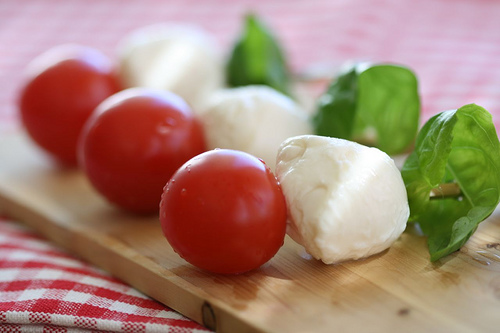
    Mozzarella: Mozzarella is best known as a pizza topper. It is made from either cow’s milk or in Italy, from water buffalo’s milk. It is milk in flavor and can be found in low-fat varieties as well! Fresh mozzarella is a real treat. It’s made from whole milk and has a softer texture and sweeter, more delicate flavor than regular, factory made mozzarella. It has 4-7 grams of fat per ounce, depending on the fat content of the milk used to make it.

    Whole Milk Mozzarella (1 oz.): 80 calories/6 grams fat

    Part-skim Mozzarella (1 oz.): 72 calories/5 grams fat

    GRATING CHEESES

    No Italian meal is complete without freshly grated cheese. Or in my house it’s any meal, not just Italian meals. We like it to snow on our food!

    Pecorino: This is made from sheep’s milk and the flavor of pecorino will depend on the area where it was made in Italy. It ranges from a firm, sharp, salty cheese to a milder, semi-firm variety. It has about 110 calories and 7-8 grams of fat per ounce. Locatelli is a pecorino romano cheese and the choice at my house. Has been since forever!

    Pecorino Romano: Pecorino Romano is made from sheep’s milk. It is straw-white in color and has a sharper flavor than the other cheeses listed here. Although it is sometimes called “Locatelli” Locatelli is a brand name of Pecorino Romano. Pecora in Italian means sheep and Pecorino Romano is one of Italy’s oldest cheeses. Legend has it that a shepherd filled his flask with sheep’s milk before a long trip and the motion during the trip caused the milk to naturally ferment. The idea for a new cheese was born. Today most Pecorino is made in Sardina Italy. With its fine flavor Pecorino’s popularity as a grating cheese has grown significantly in the U.S. Since sheep only give milk for 6-7 months a year all production must satisfy the public’s demand for the entire year.

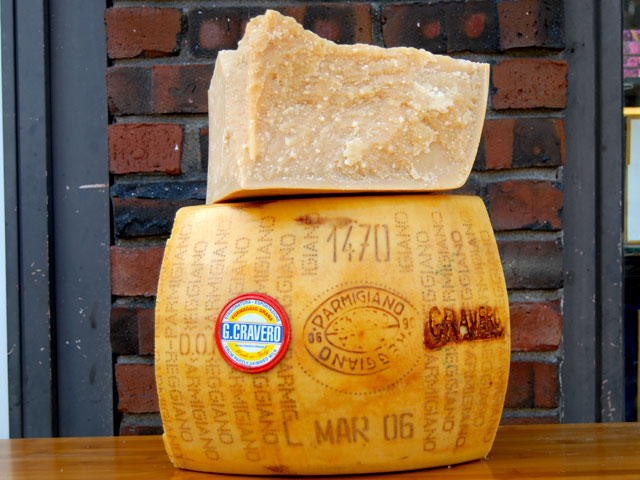
    Parmesan Cheese: Parmigiano-Reggiano cheese is the Ritz of parmesan cheeses! It is an aged hard cheese made from cow’s milk and is strictly regulated in Italy. This is to control the quality. In the U.S., this cheese is often limited, but the results are different from the Italian cheese. Older, aged varieties from Italy have a stronger flavor and are drier. Stick to freshly grated aged varieties for the most flavor. You’ll be able to use less due to the more intense flavor. It has about 110 calories and 7 grams of fat per ounce. Parmigiano-Reggiano is also very expensive. I have found excellent varieties at a few places, such as BJ’s. The price is still high but a little less painful. Same goes for the Pecorino cheese. In Italy it is so valuable that trucks carrying a load of Parmigiano have been hijacked at gunpoint!

    TABLE CHEESES

    Asiago Cheese: Asiago is made from cow’s milk. It’s a semi-hard to hard cheese. (My cat Gus loves it! Really!) It is full of many time holes and has a rich flavor and creamy texture when it hasn’t been aged for very long. As it ages, the cheese becomes firmer and can be grated easily. It can also be eaten by itself. It’s similar in fat content to Parmesan cheese. Asiago is from the Veneto region.

    Fontina: This is a delicious delicate, sweet, semi-soft cheese with a nutty flavor. It’s also made from cow’s milk and melts easily and smoothly. The more aged the cheese, the richer the flavor. One ounce has about 110 calories and 9 grams of fat.

    Gorgonzola: Gorgonzola is a blue-veined cheese made from cow’s milk and has a creamy texture with a slightly pungent, rich flavor. When aged for more than six months, the flavor can become very strong. It’s a great match with fruit, such as apples or pears. It also can be melted into sauces or crumbled over salads. For a milder variety, look for torta di Gorgonzola. This layers Gorgonzola with sweet marscapone. Gorgonzola has about 100 calories and 8 grams of fat per ounce.

    Marscapone: Marscapone is super-rich and  tastes like a cross between cream cheese and whipped butter. It’s usually used in desserts but it’s also great as a spread for delicate crackers or fresh fruit, such as strawberries and pear slices. It’s a soft cheese made from cow’s milk and has about 124 calories and 13 grams of fat per ounce. Not exactly a cheese for diets!

    Provolone: Provolone is another cow’s milk cheese. It is delicate and creamy when aged for up to two months. When it’s aged longer it begins to take on a spicy, sharp flavor. Most people use provolone as a table cheese with crackers, pepperoni, apples etc. but it’s also an excellent cooking cheese. Aged provolone can be used for grating. One ounce has about 100 calories and 8 grams of fat.


    Blog update

    Hi everyone. Just letting you know I will be posting later today. I am putting together a series of Italian Cooking posts. I love Italian food and I’m sure most people when asked will say that Italian food is their favorite. There are so many regions in Italy that have such a diverse range of foods. I am going to give everyone a little insight into different types of foods and what they are, different terms in Italian cooking, Italian pantry basics and other fun stuff. It’s taking a bit to organize all the information so I will be doing that later today, promise! I know the #1 place I want to visit next is Italy. Especially the Tuscany region. And call it a “chick flick” if you want but I just loved the movie “Under the Tuscan Sun”. It introduced me to that lovely liqueur Limoncello! So I will of course touch on that region for sure. Maybe while sipping some Limoncello! So sit back and relax and I’ll be back shortly!

    Gifts For Cooks Under $10 (Article)

    Today’s post is an article I found online. It’s a pretty good list to have for those cooks in your life. I know I am always looking to find a quick gift for someone and if you know they love to cook or bake this will help. Enjoy!

    ******************************************************************************************************************

    Gifts For Cooks Under $10

    Written by Stephanie Martin | 0 Comments | Grab This Article Grab This Article

    I love to cook and bake.  My favorite place is to be in the kitchen cooking meals for my family.  And I’m always looking for new gadgets or replacement utensils for my kitchen.   I’m sure that there are many of you out there that also have cooks/bakers on your gift lists and you’re not sure what to buy for them, so I thought I’d give you a few ideas:

    –          Wooden Spoons – I love wooden spoons, and good ones are hard to come by.   I love the ones that have a good thick, long handle on them so that I can use them in stock pots.

    –          Whisk – I have varying sizes of whisks and use them all of the time.  But, there are a lot of days that I wish I had more than 1 of my smaller one.  Those really come in handy when needing to whisk small amounts of something.  Yes, I know you can use a fork, but a whisk is more fun.

    –          Measuring Cups/Spoons – As every good cook knows, you can never have enough measuring utensils.  When I’m giving some as gifts, I like to look for some that I would use, but also look for some that are seasonal.  It makes cooking that much more fun when you’re using fun utensils.

    –          Bamboo Utensils – This is another great idea.  Yes, it’s similar to the wooden spoons, but these are actually a lot better and last longer

    –          Scraper – I use mine all of the time for things such as scooping up lots of chopped veggies to scraping up bits of dough off of my mat after making breads.

    –          Silicone Spatulas or Spoonulas – This is another item that I know I use all of the time and I’m convinced that you can never have enough of.  When I have a big baking day, I always seem to run out of them, even when I’m washing and reusing them.

    –          Serving Platters – I love to use nice platters when I’m having a get-together.  Even though they are usually casual, it makes it feel more special.

    –          Cookie Cutters – If you know someone who likes to bake cookies, try finding a nice set of cookie cutters.

    –          Apron – An apron is a must have for any serious cook/baker.  You can find a plain white or colored apron for just a few dollars, and you can get some fabric paint and dress it up a bit.  Or buy some fabric paint and have the grandkids make grandma/grandpa a personalized apron with their handprints, and you could write their name, date, and age below them.

    –          Pot Holders – These can be found very reasonably priced or, if you sew or quilt, you could even make some!

    –          Dish Towels – My towels have been well loved over the years and are really beginning to show it.  New towels are always welcome in my kitchen, and I’m sure your cook/baker will feel the same way!

    –          Baking Basket – put together a basket of their favorite cooking ingredients such as a box of cake or brownie mix, sprinkles, box of powdered sugar, a spoon or spatula, cupcake liners.

    –          Dinner Basket – Put together an Italian dinner basket.  You could include a box of pasta, sauce, garlic bread, and bagged salad mix, and a bottle of favorite dressing.

    Here are just a few ideas to help you find that special cook/baker on your list something nice!   Hope this gives you some great ideas!

    Last 5 posts by Stephanie Martin

    This is a Free Reprint Article

    You are welcome to publish this article on your website, blog, ezine (free of cost) as long as the author’s resource information remains intact and all links remain live and clickable. This article may be published offline in print, provided the author’s name and full link to the author’s website are both included. Copyright is reserved by author. Read our full Terms of Service.

    You can leave a response, or trackback from your own site.

    About Stephanie Martin

    Stephanie Martin, a work-at-home-mom of 2 daughters and 1 son, and the owner and publisher of Busy Moms Online, and site with information for busy moms, and My Country Haven, a blog documenting her life living on a farm and their frugal journey of remaining debt free while becoming more self-sufficient.

    rss Stephanie Martin’s RSS

    Hello world!

    Hi everyone! Well I finally did it! I am officially blogging! Today’s post will just be an introduction to what I am doing in the future! I am in the process of writing a cookbook and I thought what better way to get started than to write a blog. This blog will have daily recipes and hopefully pictures to go along with them! I have a habit of posting my daily dinners on Facebook and I keep getting requests for the recipes so what better way than to put them in a blog!

    Each day I will have a different type of recipe. For now I am going to try to post the following: Sunday: Potpourri (great restaurants/gadgets/food products etc); Monday: Sides/Soups/Salads; Tuesday: Main Dishes; Wednesday: Family/Friends Recipes; Thursday: Desserts/Baking; Friday: Beverages; Saturday: Snacks/Appetizers. These may change as I go along so don’t hold me to them! I will also include any little story that goes with the recipes. I am also going to link the blogs to my Facebook and Twitter accounts, once I figure that out!

    How did I decide to do this?

    After getting laid off (thanks to our economy) in July 2009 from my dream job that I had for almost six years I’ve been trying to do something to make some money. I worked at home for this last job and the thought of going back to an office or retail type job just made me cringe. For one thing I would need a whole new wardrobe and without an income that would be tough. Because not only was I unemployed but my husband had gotten laid off as well in February 2009! He luckily had severance pay, I did not. Luckily he was able to get unemployment, I again did not. I had so many mixed feelings and didn’t know what to do. My worst nightmare had come true. But knowing we were not the only ones in this situation made it a little better, not much, but a little. Florida’s unemployment rate as well as the national rate is much higher than reported since they don’t take into account all of the people who were ‘independent’ or small business owners etc. Anyone who does not collect unemployment is not counted. So here I am. I’ve sold lots lately on eBay, it’s amazing how much stuff I found to sell! It has paid for extras which has been nice. I am also “thinking” about selling Tupperware again, but just online. I hated doing parties but LOVE Tupperware. So with that said my Recipe Blog is born! I hope everyone will enjoy it and I look forward to comments!

    Cruise Ship Recipes at Home

    How do I Make That?

    Rachael Ray

    It's Not Just Popcorn!

    Joanne Eats Well With Others

    It's Not Just Popcorn!

    Garlic Girl

    It's Not Just Popcorn!

    BuzzFeed - Tasty

    It's Not Just Popcorn!

    An Edible Mosaic™

    It's Not Just Popcorn!

    StephenKing.com - Latest News

    It's Not Just Popcorn!

    Food52

    It's Not Just Popcorn!

    Big Bear's Wife

    It's Not Just Popcorn!

    The Weekend Gourmet

    It's Not Just Popcorn!

    Skinnytaste

    It's Not Just Popcorn!

    What's Cooking at the Genua's?

    It's Not Just Popcorn!

    Simply Recipes

    It's Not Just Popcorn!

    It's Not Just Popcorn!

    Homemade In The Kitchen

    Small Batch Recipes and Recipes For Two

    overdeepblueseas

    OVER DEEP BLUE SEAS BLOG @ WordPress.com

    Sluggo's Escapades

    What's Sluggo up to today?

    RavieNomNoms

    A Girl, Her Blog, and Lots of Food Pictures!